
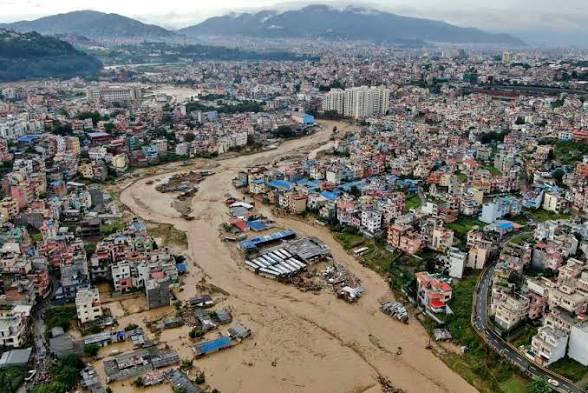
Massive floods in the Nepal-Tibet have resulted in deaths of many and displacement of several others.
Part of a glacier on Wednesday collapsed high in the Himalayas, triggering catastrophic flooding along the Nepal-Tibet border.
Nepal police say 270 bodies have been found after glacial floods hit the Himalayan nation and the bordering autonomous region of Tibet.
Al-Jazeera reports that rescue teams are searching for survivors along the Nepal-China border after the catastrophic torrent of floods and mud swept through several communities on Wednesday.
Chinese Prime Minister Li Qiang is visiting the affected areas in Tibet, state media said.
More than 500 people are missing in Tibet, including hundreds of foreigners.
Countries and organisations around the world are sending cash, relief supplies and other assistance to Nepal as it responds to the aftermath of the floods.
Prime Minister Andy Burnham has said the UK will offer £5m ($6.8m) to help the Nepalese government amid a “very distressing and devastating situation”.
At least 288 Indian nationals are missing in Nepal and another 200 remain stranded in China, India’s foreign ministry says.
At least 21 Indians belonging to the southern Tamil Nadu state who travelled for the Kailash Mansarovar Yatra pilgrimage have been rescued, said the ministry’s spokesperson Randhir Jaiswal on X.
Other reports say 644 tourists are missing, including 517 foreigners as well as 127 Nepalis in flood-affected areas, Nepal’s tourism board has said in its latest update.
Meanwhile, Care Nepal, an aid organisation, is mobilising emergency relief, including shelter, hygiene, and dignity kits for affected families, its director said in a statement.
“The flooding has left affected families without homes, possessions, and livelihoods, and has raised concerns about the spread of waterborne diseases due to damaged water and sanitation infrastructure,” said Mona Sherpa, CARE Nepal’s country director.
Sherpa added that a gender analysis will be conducted to ensure the organisation’s response is “informed by the specific needs and risks facing women and girls”.
“Relief efforts will prioritise those most in need, particularly women, girls, older people, and people with disabilities, who are often hit hardest in the aftermath of a disaster like this,” she said.







Leave a Reply