
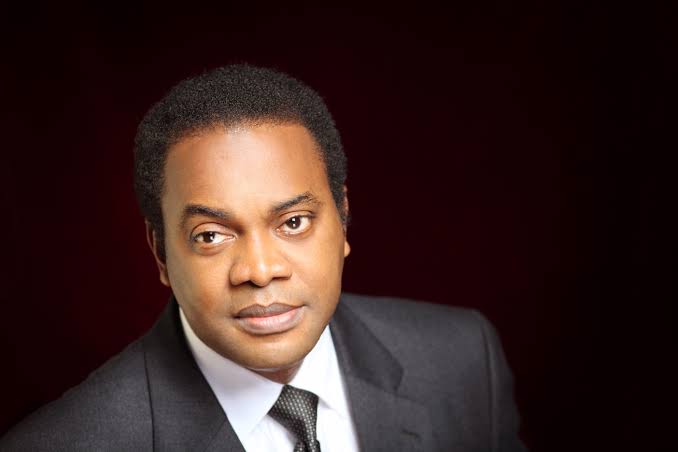
Former Cross River State Governor, Donald Duke, has criticised the Federal Government’s Lagos-Calabar Coastal Highway project, describing it as a costly misplaced priority that Nigeria cannot afford under its current economic conditions.
Speaking during an interview on Arise News, Duke questioned the project’s economic viability, engineering feasibility and place among the country’s most urgent infrastructure needs.
“I know the country cannot afford it,” Duke said, questioning the logic of constructing a major highway along Nigeria’s coastal belt from Lagos to Calabar.
According to him, the terrain would make the project extremely expensive and technically challenging.
“You cannot build a road on the coast from Lagos to Calabar,” he said, adding “you’ll probably have to build about 100 or 200 bridges to go through those swamps.”
The Lagos-Calabar Coastal Highway is one of the Tinubu administration’s major infrastructure projects and is intended to link coastal states while supporting trade, tourism, investment and economic activity.
Duke argued that the resources being committed to the project could deliver greater value if directed towards electricity, healthcare and education.
He said Nigeria already had road networks connecting the southern corridor to Calabar and suggested that government should prioritise repairing and upgrading existing infrastructure if improved connectivity was the main objective.
“There’s some expenditure we make that does not reflect the realities of our circumstance.”
“You’ve got to prioritise. Focus on what is required. The amount going to be spent on that, we’d better spend providing electricity, we’d better spend upgrading your healthcare system,” Duke said.
Duke’s comments come amid broader debate over public spending at a time of high inflation, rising debt pressures, weak purchasing power and deteriorating social infrastructure.
He argued that Nigeria’s challenge was not simply a shortage of projects but the failure to properly prioritise them.
According to him, a country facing significant deficits in power, healthcare, education, security and productivity should be cautious about committing huge resources to large-scale infrastructure projects while basic services remain under pressure.
Duke identified electricity as a key driver of productivity, urging the government to make gas, hydro, solar and other energy sources more widely available and affordable.
He argued that improving power supply would have a more immediate impact on businesses, employment and household welfare than a coastal highway whose economic returns, in his view, remain uncertain.
The former governor also criticised the current economic environment, citing high interest rates as a major obstacle to businesses seeking to borrow, expand and create jobs.
He said Nigeria’s economy has failed to grow in line with its population, which is now estimated at more than 230 million, and warned that the country’s governance and economic policies were not adequately addressing demographic pressures.
Reflecting on his tenure as Cross River State governor from 1999 to 2007, Duke said his administration focused on initiatives designed to stimulate economic activity and position Calabar as a tourism and cultural destination.
His administration was associated with initiatives including the Calabar Carnival and the development and promotion of Obudu Mountain Ranch, alongside investments in infrastructure and tourism.
Duke said the projects were based on what he considered the state’s comparative advantages and the need to generate economic activity through tourism, hospitality and culture.
He argued that Nigeria now needed similar clarity at the national level, with government spending aligned with the country’s economic realities.
Duke is returning to frontline politics as the presidential candidate of the Peoples Redemption Party (PRP) ahead of the 2027 general election.
He said his return to politics was motivated by what he described as the urgency of Nigeria’s economic, security and governance challenges, which he attributed to poor leadership and a stagnant economy.
On security, Duke advocated a more localised approach, arguing that security, like healthcare and education, is more effective when it is delivered closer to the people.
He expressed support for state police but said greater emphasis should be placed on intelligence gathering rather than heavy enforcement.
Duke also called for stronger accountability within the police and other security institutions, including holding local commanders responsible for serious breaches within their jurisdictions.
On corruption, he argued that stronger consequences were necessary, saying misconduct persists when institutions fail to adequately punish wrongdoing.
He also called for judicial reforms, particularly faster resolution of commercial disputes, which he said would be necessary to attract investment and restore confidence in Nigeria’s legal system.
Duke further proposed reducing the cost of governance by restructuring the National Assembly into a unicameral legislature comprising only the Senate.
On the 2027 election, he acknowledged the fragmentation within the opposition and attributed some of its difficulties to competing political interests.
He said he hoped to play a role in efforts to build a more cohesive opposition capable of challenging the ruling party.
Addressing legal challenges surrounding his emergence as the PRP presidential candidate, Duke dismissed the suits as distractions and urged Nigerians to focus on the records and policies of those seeking political office.

Leave a Reply